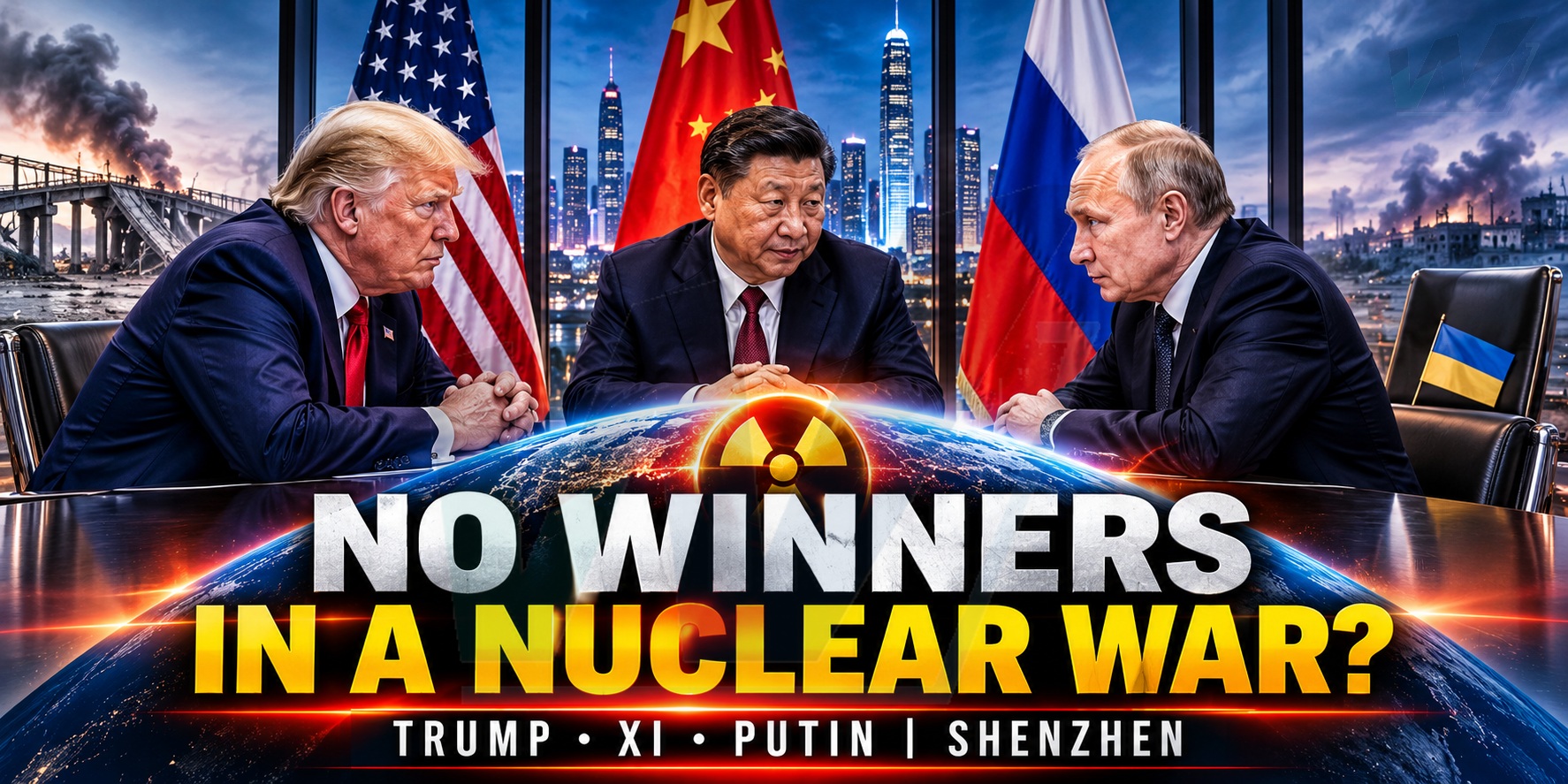
 Trump, Xi and Putin Met in Shenzhen. The Kremlin Released a Joint Statement. Washington Hasn’t Published Its Own.
“No Winners in a Nuclear War”: The Shenzhen Summit’s Big Line, and the Bridge That Complicates It
The doors closed on Thursday in Shenzhen. For about an hour and a half, the presidents of the United States, China and Russia sat in one room with no reporters. When it ended, there were no questions and no shared news conference. Donald Trump went straight to the airport and flew home.
What came out came from the Kremlin. It published what it called a statement agreed by all three leaders: that they “reaffirmed that there can be no winners in a nuclear war, and that it should never be unleashed.”
But that line is only part of the story. Earlier the same week, Ukraine had struck the Kerch Bridge to Crimea, and Putin said afterward that Russia “will not negotiate after the attacks on the Crimean bridge.” Ukraine was not in the room.
So, did the world just get a nuclear-risk pledge, or a photograph with a press release attached?
What was said, and by whom
According to the Kremlin readout, the three leaders “exchanged views in detail on the current international situation” and agreed on four things:
- Nuclear risk: The nuclear-war line above, plus a pledge to “continue dialogue on reducing nuclear risks” with China and the United States.
- The UN: As permanent Security Council members, they back reforming it so it can respond better to global crises.
- Energy: They plan to increase gas and oil production “for the benefit of all countries.”
- International courts: They said the International Criminal Court and similar bodies “should not abuse their powers.”
The White House did not issue an immediate readout. (There wasn’t any US or Chinese text of the statement, so the wording as the Kremlin’s account). Putin’s aide Yuri Ushakov said the atmosphere was good. Russian state media reported that Putin thanked Xi as they left and said nobody had expected it to go so well.
The nuclear question
The numbers explain the stakes. The US and Russia each hold more than 5,000 nuclear weapons, according to arms-control estimates. China has more than 600 and is growing its arsenal. China has long rejected three-way arms-control talks. State media quoted Xi calling nuclear weapons a “sword of Damocles hanging over humanity” and urging that they be “completely banned and completely destroyed.” A pledge to keep talking is not a treaty, and the last major US-Russia limits have lapsed.
The war outside the room
Russian media reported that Ukraine was the main topic in Putin’s separate talks with Trump. Afterward, Putin said Ukraine and Europe were “not yet ready” to make the compromises needed to end the war. Ukraine and its European partners have long feared Washington could offer Moscow too much, including energy deals, without concessions in return, while pressing Kyiv on territory without firm security guarantees. Those fears are theirs, and the Kremlin disputes the framing.
The bridge adds to the backdrop. Ukraine’s president called Tuesday’s attack on the Kerch Bridge “unprecedented” and published footage showing part of the roadway collapsed. Russian officials said traffic was suspended.
Trade, AI and one handshake
Trump met Putin and then Xi on the sidelines of the Asia-Pacific Economic Cooperation summit before the three-way session. Greeting Putin, he said, “He’s, my friend.” With Xi, trade and tariffs were the main topics, and Trump said he would press China to “do some more” for American farmers. A US-China tariff truce expires January 10. Trump also told the forum he would block “globalist regulation” of artificial intelligence, while Washington investigates a chip-smuggling scandal involving a company called Megaspeed, which denies wrongdoing.
What to watch next
Whether “no winners in a nuclear war” becomes a treaty, a talking point or neither will show in the next few weeks. Watch for a US or Chinese version of the statement, for how Kyiv and European governments respond, and for what happens to the tariff truce before January 10.
The question that stays
If the three most powerful leaders can agree that nobody wins a nuclear war, why couldn’t they say it to reporters together?