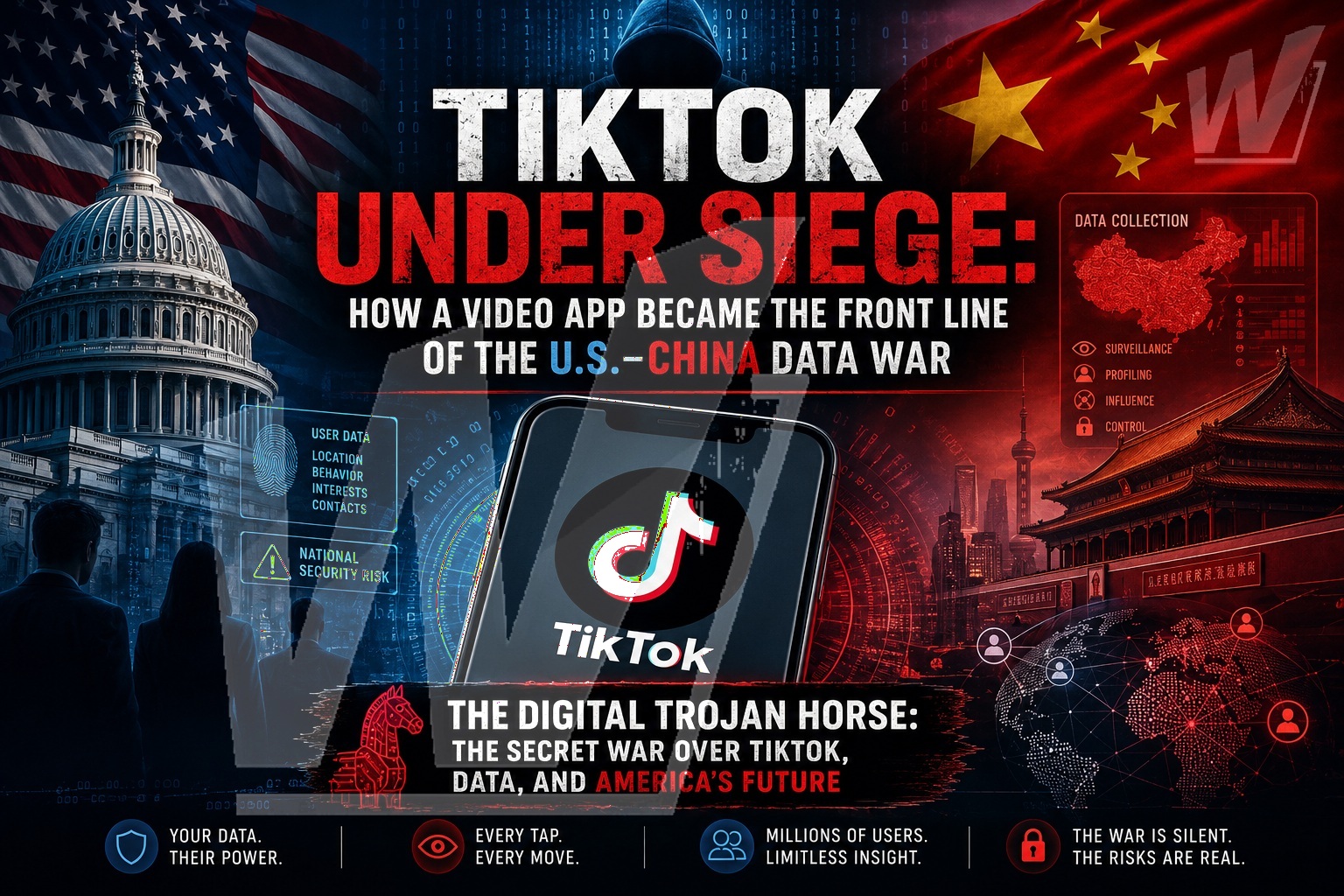
The Digital Trojan Horse: The Secret War Over TikTok, Data, and America’s Future
The battlefield is invisible.
There are no tanks rolling across borders. No fighter jets roaring overhead. No missiles lighting up the night sky.
Instead, the weapons are algorithms. The ammunition is data. And the battlefield sits in the hands of more than a billion users worldwide.
At the center of this silent conflict stands TikTok.
What began as a platform for viral dances, comedy clips, and entertainment has evolved into one of the most controversial geopolitical flashpoints of the modern era. Behind every swipe lies a question that has unsettled intelligence agencies, lawmakers, and security experts across Washington:
Is TikTok merely a social media phenomenon—or the most effective digital intelligence platform ever created?
The app’s rise was nothing short of explosive. Within a few years, TikTok conquered global markets, captivated younger generations, and challenged the dominance of Silicon Valley’s most powerful companies. Its algorithm proved remarkably effective, keeping users engaged for hours and turning unknown creators into global celebrities overnight.
But as its popularity surged, so did suspicions.
Inside government offices and national security agencies, analysts began asking uncomfortable questions. How much data was being collected? Where was it stored? Who ultimately controlled access to it? And perhaps most importantly—could that information be used for purposes far beyond advertising and entertainment?
Investigators soon turned their attention to ByteDance, TikTok’s Chinese parent company. The more they examined the corporate structure, the more concerns emerged about the relationship between the company, Chinese regulations, and the broader strategic ambitions of Beijing.
For critics, the implications were alarming.
Every search, every interaction, every preference, every social connection creates a digital footprint. When combined across millions of users, these fragments become something far more valuable: a detailed map of a society’s habits, fears, interests, relationships, and vulnerabilities.
To security experts, data is no longer a commercial asset—it is strategic power.
The debate intensified as comparisons with Huawei resurfaced. What began with concerns over telecommunications infrastructure had now moved into personal devices. The network was no longer outside the home; it was inside every pocket.
China has consistently rejected allegations that TikTok poses a national security threat, arguing that accusations are politically motivated attempts to suppress Chinese technological innovation and maintain American dominance in the digital economy.
Yet the confrontation continues to escalate.
Legislators debate restrictions. Intelligence officials issue warnings. Technology experts analyze risks. Meanwhile, millions of users continue scrolling, largely unaware that their favorite app has become a central front in a global struggle for influence.
This is no longer a dispute about social media.
It is a contest over information.
A battle over who controls the world’s most valuable resource.
A struggle that reaches beyond Silicon Valley and Beijing into the future architecture of global power itself.
And somewhere behind the endless stream of videos, likes, comments, and recommendations lies the question that neither side can afford to ignore:
Has the digital Trojan horse already crossed the gates?
Or is the real battle only beginning?