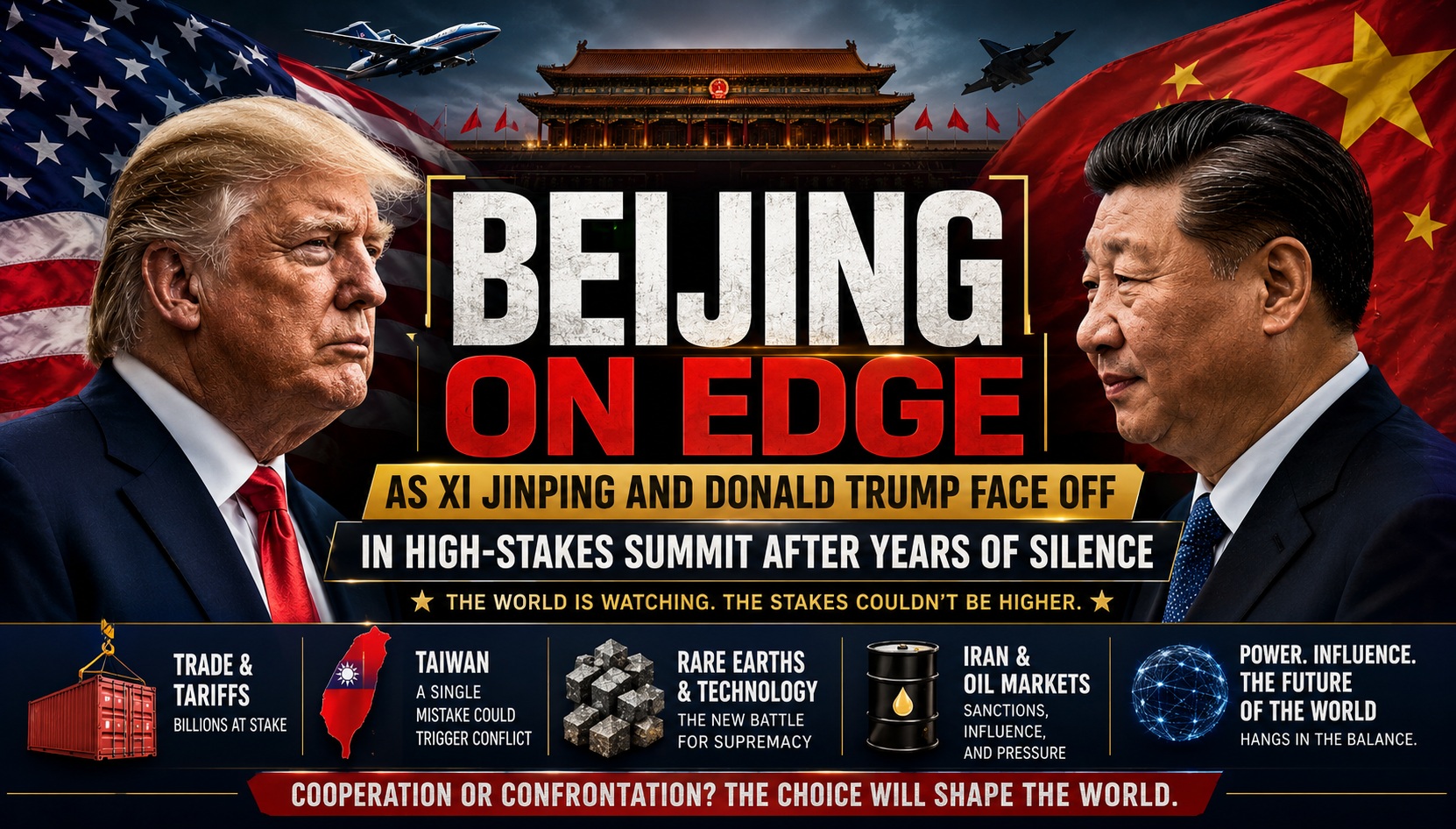
A tense political stage is set in Beijing as Chinese President Xi Jinping welcomes U.S. President Donald Trump for their first face-to-face summit in years — a rare encounter carrying global consequences that stretch from trade wars to Taiwan, Iran, and the future balance of power.
This visit marks the first trip by a sitting U.S. president to China in nearly a decade, reviving memories of Trump’s 2017 visit with his wife Melania. But this time, the atmosphere is far more charged, the stakes dramatically higher, and the world watching every move.
Inside the Great Hall of the People, the scene was carefully choreographed — yet thick with political tension. Xi Jinping greeted Trump shortly after 10 a.m., shaking hands with senior members of the U.S. delegation, including top officials long known for their hardline stance toward Beijing. A military band played both national anthems as ceremonial cannons thundered across the square, while children waved American and Chinese flags in a symbolic display of unity masking deeper rivalry beneath the surface.
Later that evening, Xi is set to host a formal state banquet in the same hall, while Trump prepares to visit the historic Temple of Heaven — once a sacred site where Chinese emperors prayed for prosperity. The symbolism is unmistakable: tradition meeting disruption, diplomacy shadowed by competition.
Trump arrived in Beijing aboard Air Force One for a tightly packed two-day mission, accompanied by some of the world’s most influential business leaders, including figures from the tech and industry sectors. The message is clear — this is not just diplomacy, but a high-stakes economic offensive.
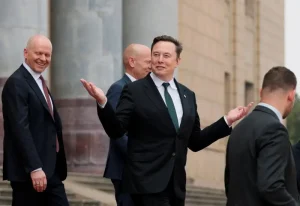
According to Reuters, Elon Musk told reporters that he hopes to achieve “many good accomplishments” in China.
Standing before Xi, Trump projected optimism, declaring a “great future” for both nations. He described the meeting as an honor and insisted that relations between Washington and Beijing could reach unprecedented heights. Xi, however, struck a more cautious tone — warning that the two powers must choose cooperation over confrontation, stressing that “partners, not rivals” is the only viable path forward.
But beneath the diplomatic language lies a warning that cut through the ceremony: Taiwan. Xi Jinping delivered one of his strongest messages yet, cautioning that mishandling the Taiwan issue could push both nations toward direct confrontation — a scenario he described as extremely dangerous for global stability.
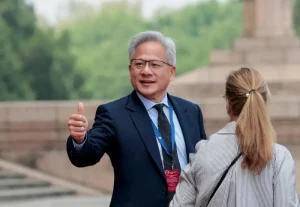
Jensen Huang was quoted as saying that “the meetings went extremely well.”
For Washington, the agenda is equally loaded. Trump is pushing for major trade breakthroughs in agriculture, aviation, and market access, bringing a powerful delegation of business leaders to strengthen his negotiating hand. Behind closed doors, he is expected to press Xi on opening China’s markets further to American companies.
At the same time, tensions remain unresolved over tariffs, rare earth exports, artificial intelligence competition, and the fragile trade truce agreed in previous talks. Both sides are now weighing whether to extend the temporary ceasefire for another year — or risk reigniting an economic confrontation that has already shaken global markets.
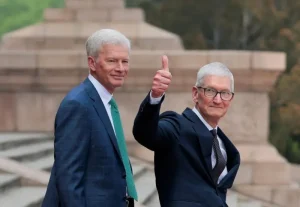
When asked for his opinion on the meetings, Tim Cook gave a thumbs-up gesture.
Iran is also on the table. Trump is expected to hold extended discussions on Tehran’s oil exports to China despite U.S. sanctions, while Washington pushes Beijing to take a more active role in restraining Iranian regional activity. U.S. officials, however, are sending mixed signals — reflecting the complexity of aligning diplomacy with strategic pressure.
Taiwan, once again, looms as the most explosive issue. Trump has suggested discussing U.S. arms sales to the island, a move that could further strain already fragile relations with Beijing, which considers Taiwan a breakaway province.
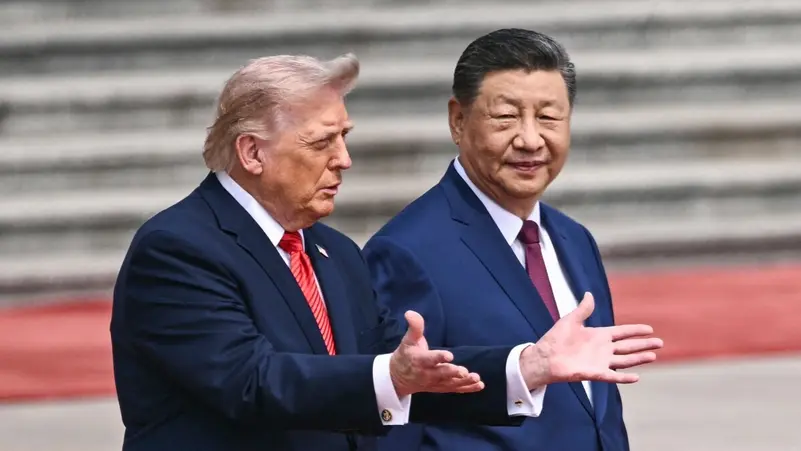
Trump–Xi Summit (AFP)
As the summit unfolds, both leaders appear locked in a delicate power game — balancing confrontation and cooperation, economic opportunity and geopolitical risk. Trump hopes to leave Beijing with tangible deals and even a future invitation for Xi to visit the United States in 2026. Xi, meanwhile, aims to project stability, strength, and control in a world increasingly defined by uncertainty.
What emerges from this summit may not be full reconciliation — but it could determine whether the world’s two biggest powers step back from the edge or move closer to a new era of confrontation.