Trump Welcomes Xi at Andrews as U.S.-China Trade Truce Gets Two-Month Lifeline
Trump-Xi Summit: Trade, AI, Iran and Taiwan Collide as Washington and Beijing Try to Keep Their Fragile Truce Alive
September 24, 2026 / Washington
The red carpet is down. The military band is playing. But behind the pageantry, Washington and Beijing are walking into a far more dangerous negotiation.
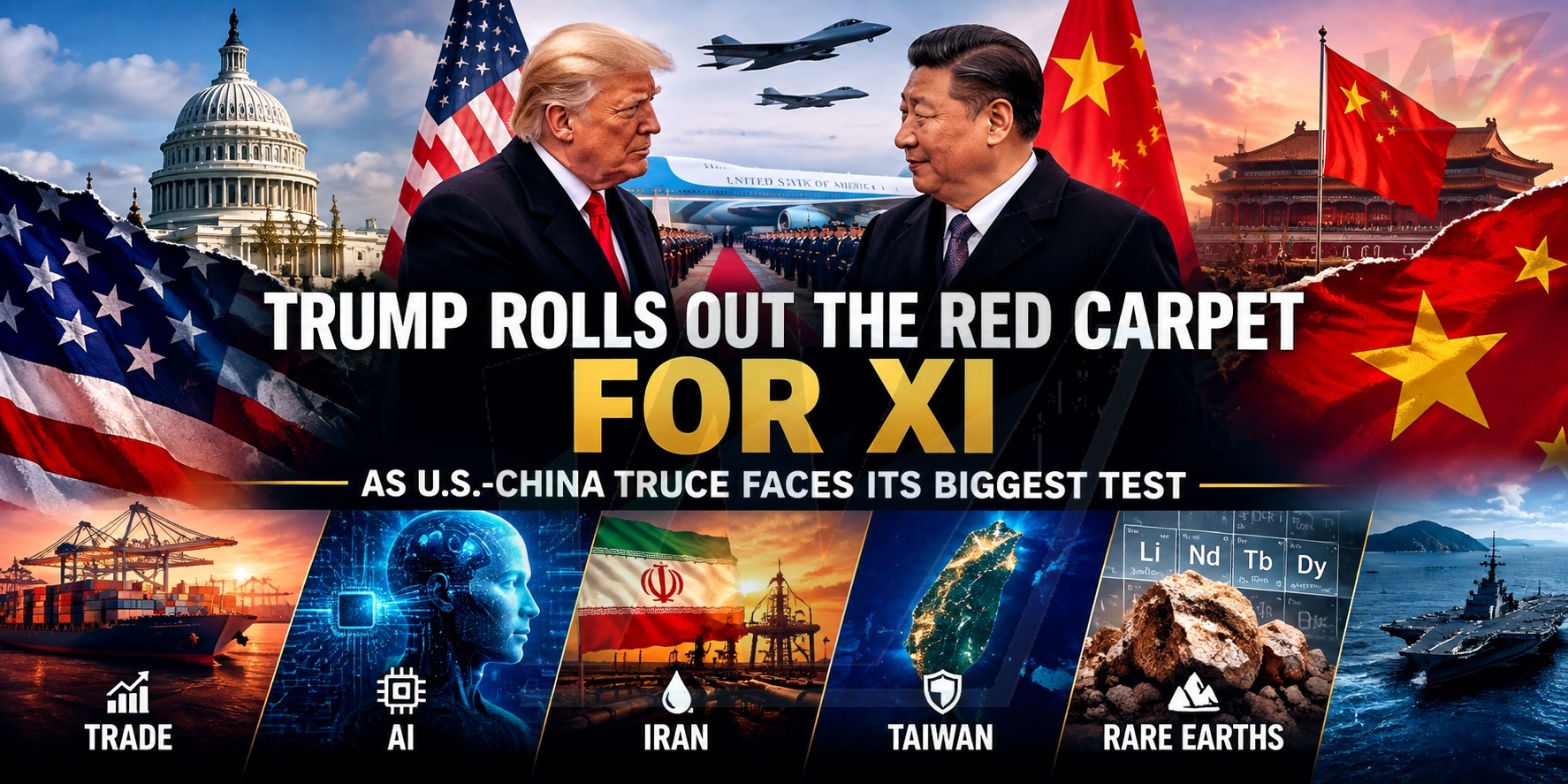
President Donald Trump personally welcomed Chinese President Xi Jinping at Joint Base Andrews, giving the Chinese leader an unusually high-profile arrival as the two superpowers opened a three-day state visit focused on trade, artificial intelligence, Iran, Taiwan and strategic technology.
Trump and Xi stood side by side as national anthems played and U.S. military aircraft roared overhead.
The message was unmistakable: talk first, confrontation later.
But the calm is fragile.
Trade Truce Gets a New Lifeline
The first breakthrough came before the main summit.
U.S. Treasury Secretary Scott Bessent announced that Washington and Beijing had extended their trade truce from its November 10 deadline to January 10, 2027, buying negotiators two additional months to prevent another tariff confrontation.
The extension is not a comprehensive trade settlement. It is a pause, designed to keep the economic relationship from sliding backward while harder disputes remain unresolved.
Tariffs, Chinese purchases of American goods, rare-earth supplies and technology restrictions remain on the table.
And the clock is still running.
AI Becomes the Next Superpower Battlefield
Trade may have triggered the U.S.-China confrontation, but artificial intelligence could determine its next phase.
Washington and Beijing are racing for dominance in technology increasingly tied to economic power, military capability and national security.
Pre-summit negotiations included discussions about creating a communication channel for AI risks and safety, while the two countries continue to compete over advanced chips, computing power and technological controls.
The paradox is striking:
The two rivals may need to cooperate to control AI risks while simultaneously competing to dominate AI itself.
Iran Adds a Dangerous New Fault Line
Then there is Iran.
The war has created a new source of tension between Washington and Beijing, with U.S. officials examining China’s relationship with Tehran and reports concerning Chinese satellite intelligence allegedly connected to Iranian military operations.
Trump has publicly played down some of the claims, but China hawks in Washington are pressing the administration to confront Beijing over its ties to Tehran.
That puts Xi in a delicate position.
China is Iran’s major economic partner and a major destination for Iranian oil exports, while Beijing has also called for stability around the Strait of Hormuz.
Iran therefore sits directly at the intersection of China’s energy interests and America’s military concerns.
Taiwan Remains the Red Line
And underneath everything is Taiwan.
Beijing considers Taiwan part of China and opposes American military and political support for the island. Washington’s relationship with Taiwan remains one of the most sensitive issues in U.S.-China relations.
Neither side can afford to ignore it.
The same is true of China’s control over critical minerals and rare-earth processing, resources Washington wants to secure as it attempts to reduce strategic dependence on Beijing.
A Summit Built on Spectacle, and Risk
Xi’s arrival has been carefully choreographed.
The White House has prepared a formal military ceremony, flyovers, Oval Office talks, a state dinner and a final White House meeting before Xi’s departure.
Trump’s personal appearance at Andrews was itself unusual, turning the arrival into a major diplomatic spectacle.
But the ceremony cannot hide the central reality:
Washington and Beijing are not ending their strategic rivalry. They are trying to manage it.
The trade truce buys time.
The AI discussions create a channel.
Diplomacy keeps the temperature down.
But Taiwan, Iran, rare earths, technology and military competition remain unresolved.
The question now is whether Trump and Xi can convert the red-carpet diplomacy into something durable before the next deadline arrives.