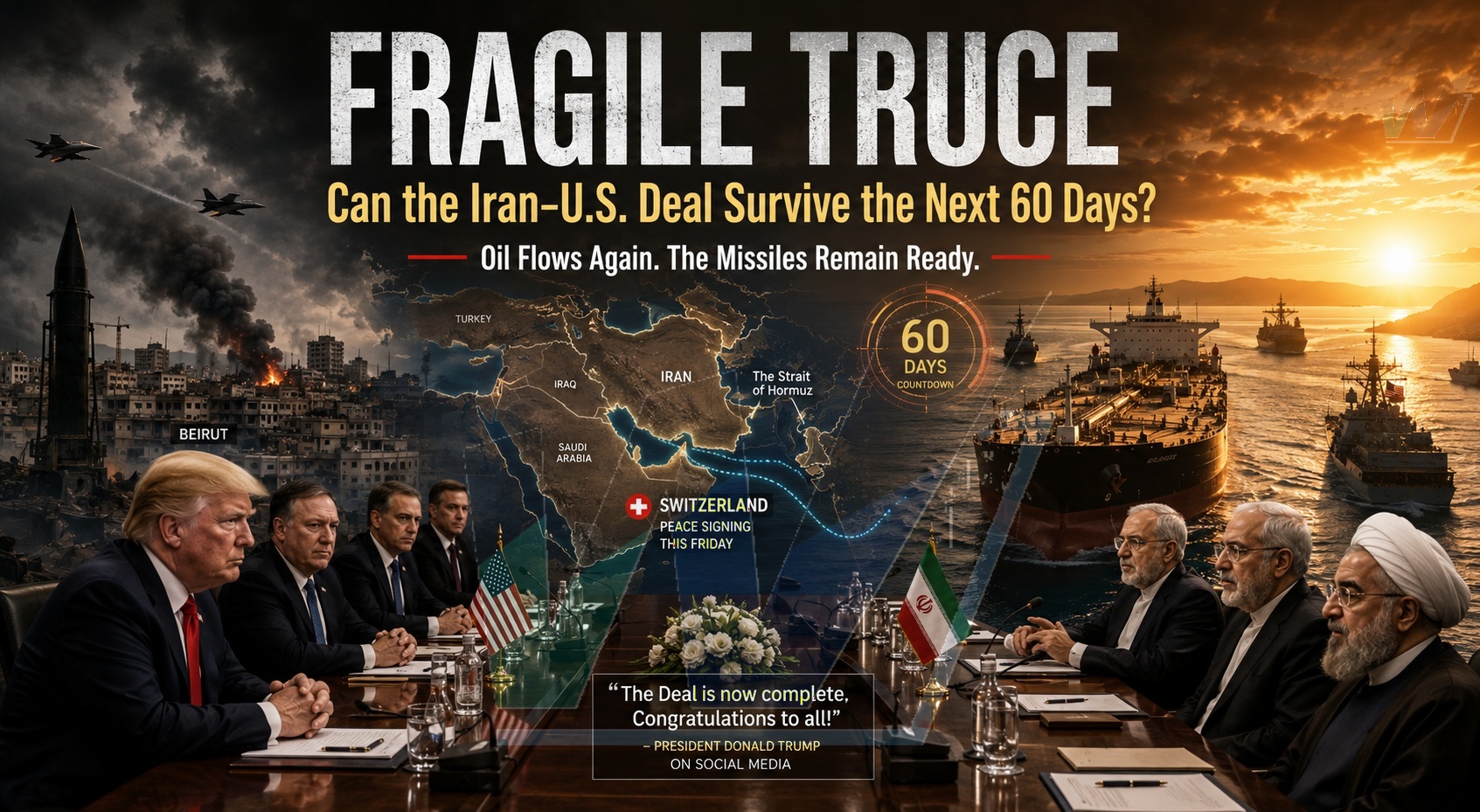
BEIRUT — In the high-stakes theater of global geopolitics, the most dangerous moments are often found in the quiet intervals between explosions. As of Monday morning, the world finds itself in one such pause. Following over 100 days of conflict that pushed the global economy to the brink of collapse, Washington and Tehran have announced a preliminary agreement to halt hostilities.
Yet, as the ink dries on the memorandum of understanding—scheduled for formal signing this Friday in Switzerland—the international community remains breathless. Is this the long-awaited thaw, or merely a tactical regrouping before the next storm?
The Anatomy of the Breakthrough
The agreement, brokered largely through back-channel mediation by Pakistan and Qatar, represents a pragmatic retreat from the precipice of total regional war. The terms, while skeletal, address the world’s most immediate anxieties:
- Immediate De-escalation: A permanent termination of military operations across all fronts, including the volatile Lebanese theater.
- The Hormuz Lifeline: The U.S. has pledged an immediate end to its naval blockade, while Iran has committed to the “toll-free” reopening of the Strait of Hormuz—the jugular vein of global energy.
- The 60-Day Clock: The most combustible issue—Iran’s nuclear program—has been “parked” for two months of intense technical negotiations.
A Calculated Gamble: Good or Bad for the World?
The relief in global markets is palpable; oil prices have retreated from their wartime highs, and shipping insurers are beginning to tentatively re-map routes through the Persian Gulf. However, analysts warn that stability is not the same as peace.
The Case for Optimism (The “Good”)
For the average citizen in Tokyo, Berlin, or New York, this deal is a vital reprieve. It prevents a projected global recession fueled by energy scarcity and halts a conflict that has claimed thousands of lives. By decoupling the immediate humanitarian crisis from the “unsolvable” nuclear file, both Washington and Tehran have bought themselves political capital—President Trump secures a campaign-defining diplomatic win, while the Iranian leadership avoids further erosion of its domestic authority.
The Case for Skepticism (The “Bad”)
The critics, however, see a dangerous game of “kick-the-can.” By deferring the nuclear question, the agreement leaves the fundamental cause of the 2026 war untouched.
- The Nuclear Shadow: If the 60-day window expires without a breakthrough, the world may find itself back at “Day One,” but with both sides having learned each other’s military limitations.
- The Power Vacuum: The agreement effectively leaves Iran’s regional network—its “Axis of Resistance”—partially intact, a reality that remains a red line for Israel and several Gulf Arab states.
The Verdict: A Bridge Built on Sand
Whether this deal proves “good” or “bad” for the world depends on what happens inside those closed-door sessions in Switzerland. If this is a genuine pivot toward new regional security architecture, it marks a historic diplomatic triumph. If it is merely a strategic pause, it represents the most dangerous kind of delay—one that gives belligerents time to rearm, re-evaluate, and prepare for a far more devastating second act.
For now, the global pulse has slowed. But in a region where history is measured in cycles of vengeance, the world watches the Strait of Hormuz, waiting to see if the tankers will truly pass, or if this fragile dawn is merely a prelude to a darker day.